
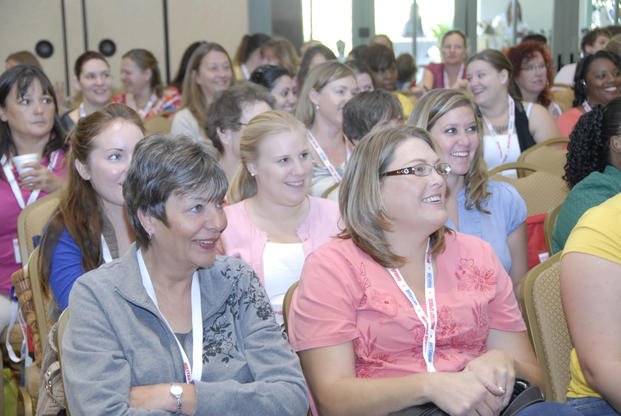
When the military lifestyle turns into a soap opera (not one that runs on the Lifetime Network), it does so in A VERY BIG WAY.
There has been no avoiding this story, really, since it’s all over the place and we all have strong feelings about this sort of activity. Or rather, bullying. Actually, I’m not sure that even the word bullying applies here – but I think that for those of us on the outside of the story, eyebrows raised in horror and a bit of resigned shock. And embarrassment.
While the situation at Ft. Bragg is undergoing an investigation it would be unwise for anyone to comment about “the truth”. Legally, I mean. When people have sued dry cleaners for sums in the millions of dollars for a pair of missing pants that weren’t really missing it’s probably wise to err on the side of caution and use those qualifying words like “alleged”, “accused”, and so forth. But what I think we *can* talk about is the generic situation, and I think that the readers of SpouseBUZZ can do so in a manner that refrains from nastiness and general name-calling. We’ve done it before in tough situations and we can do it now.
And I think we need to. I think we owe it to all military families, thousands of miles away from familial support and living lives of great accomplishment, great stress, great fears, great joys, and great sorrows to talk about the problems and figure out the solutions.
Because, when it really comes down to it, we’re all we have to rely on. And it’s been that way since before my Grandmother was a military wife with her husband in the South Pacific during World War II.
PROBLEM 1: THE FRG “RANK” SYSTEM
Not everyone will agree that the FRG (and it’s counterparts in the Air Force, Navy, and Marines) is a horrid thing. Some FRGs have functioned beautifully and everyone has gone along to get along. Some FRGs have done a bang-up job passing information, creating phone trees, and coming up with an activity program for the kids during meeting times.
And I bow at the feet of the spouses able to accomplish this. I say this with all sincerity and not a hint of sarcasm. Amazing job, folks.
But then there are the other stories. And truly those stories are Legion. Even I have some, and my husband has never deployed in a manner that had me connected to an FRG-type group that I could call my own!
We know what the problem is – the problem is rank and the lack of rank. Or rather – trying to get a workable group together when you need a leader but everyone is constantly moving and no one is supposed to come into the situation with more rank than anyone else there.
Okay, that’s a ridiculously complicated way to define the situation as well. But if you compare the volunteer organization to the paying-job organization you can see what I mean. SOMEONE has to be in charge. And how should you figure that out when it comes to the FRG?
The default position has generally been the commander’s wife. Sometimes it works. Sometimes, for a variety of reasons, it’s a VERY BAD IDEA. What I would like to know from readers are their ideas on alternatives: Who? How would it be decided?
I’ve seen the idea of a paid position come up, and I understand what is driving that, but it still makes me feel a bit hinky. Someone who is paid to do something doesn’t always really care and understand the way a willing volunteer does. I remember walking into one Airman and Family Readiness Center with a SpouseBUZZ flyer and being shown the door with the (paid) civilian at the front desk telling me, “We don’t need you trying to take money from our military families.” Um, SpouseBUZZ is free. And I’m a military spouse, too, and that was *MY* AFRC!. So double bad on you, dude.
PROBLEM 2: THE INFORMATION SPIGOT
Wouldn’t it be awesome if we got phone calls at a set time every day and there weren’t any subjects that were verboten, and we knew right off the bat if something had happened, to whom, and there was no time for rumors to start because we would get daily digests of information from the front about our deployed loved ones?
Yeah. I know, never going to happen. But a girl can dream, right?
The problem is that our flow of information depends on the person who is supposed to send it, and not everyone has the same amount of time in which to do so. Or inclination, in some cases. And when information is slow, the rumor mill starts even in groups with the best of intentions.
Usually we know something has happened before we know exactly what has happened. And then we wait. And when “something has happened”, we assume the worst. Always. Because that’s how military spouses work.
And then the information DOES come, and sometimes it’s phrased perfectly. Other times, like the recent experience of a good friend of mine, they get a beautiful and heartfelt piece about the person lost… only to get the exact same paragraph a few hours later with only the name changed to reflect the second person lost.
Not. Acceptable.
I get that the first job of those that are deployed is to do the job they were deployed for. That means they’re super busy, they’re super distracted from what’s going on at home, and really they have to be. More than anything else we want them to come home and come home safe, so we understand and put up with quite a lot of nebulous information from the front. But on the other hand, we’re holding down the home-front. And if those in charge over there want things to go smoothly over here so that the guys over there can do what they need to do with a minimum of distraction… well, they need to figure the information pipeline into that equation.
We need this fixed, we need real guidelines, and we need to address the issue of timeliness. And I want to know what YOU think we can (and should) do to fix the problem.
PROBLEM 3: WHERE DO PROBLEMS GO?
As the case currently being investigated at Ft. Bragg shows us, when you’re stuck in the no-man’s land of having no official identity outside that of your spouse you may not be able to find any recourse when the situation goes south.
Our spouses can call the IG and lodge a complaint. We can’t. Or rather, things have to get extremely bad before that option is even open to us. And that is a huge part of the problem, I think. Volunteer organizations that operate in the civilian landscape have a mechanism in place to handle issues that come up and the people that cause them. The FRG (and its equivalent) system does not. Not really.
So how do we fix that, as well?
One of the stories Andi loves to tell at SpouseBUZZ Live events is a story we heard at Ft. Bragg. One of the women attending (we’ll call her Barb) had a deployed husband, and during the deployment things had been going wrong by the bucketload. At an FRG meeting, Barb met a woman that she “clicked” with, and the woman gave her a phone number and told her to call if she ever needed anything.
Sure enough, sometime later Barb had a very sick child she needed to take to the Emergency Room and no one to watch her other children, so Barb called the number she had gotten at that FRG meeting. The woman answered and immediately agreed to come over and take care of Barb’s children while she made the hospital run.
When Barb’s husband was able to call home again, she apprised him of the situation and he asked for the woman’s name so that he could thank her husband over there. When she told him the name he paused for a bit, then in a shocked tone said “Barb – you called THE GENERAL’S WIFE?”
Barb said, “No. I called Jean, who is a military wife, just like me. Who has a husband deployed, just like me; and who has three boys, just like me. And that is who helped me.”
I tell this story here, because in the other places I’ve seen this story linked the comments have turned into angry tirades against the horrible officer’s wife who wears her husband’s rank on her collar, both hair combs, her earrings, and the top of her thong strap (in the back where it shows whenever she bends over). And I could tell you a story about the line at the commissary once about twelve years ago… But the truth is that even though the venting makes some people feel better it doesn’t solve the problem.
And we NEED to solve this problem. Deployments aren’t going to go away, and we need to fix the support structure for the spouses left at home during the deployments. We owe it to ourselves and those around us.
What are your ideas?









Comments
Wow… VERY well written! And thank you for writing it! Great questions to ponder, ones that certainly deserve a lot of thought… I don't have ideas yet, but I'm excited to see what other folks come up with!
The paid position might/could work IF it was filled by perhaps an 'ex'military wife…a retiree's wife or widow. Someone who knows the military system from experience , has been there herself for many years and understands the stresses and most likely is not cowed by rank and rank wearing spouses. It would give a permanence and stability to the position and the organization.
Where I am there are 2 support streams for spouses of deployed members, one through the MFRC with a "paid" facillitator, and the FSG (Family Support Groups) organized and ran at the volunteer level.
MY EXPERIENCE (and others may differ) is that the paid position seems to turn into a way for the military to get rid of midically discharged or other "trouble" members who they no longer want reg force. Or occasionally a nepotism position for someone's wife/kid/whatever. But they tend to be staff how are not trained in the slightest in what their new duties are, and who don't "get it".
While the FSG's tend to be ran by a volunteer who is "like us"; who gets it, sees the need, and get things done. The one I am most directly involved with is ran by a lady who saw a need and filled it, helped by two of us who are willing to do the work and spend the time. Rank not important. We have managed to get the right people in the leadership roles, based on background and abilities. I think we know how lucky we are.
We have civilian frg "leaders" here at the base we are at. I have never been told of a meeting, an event or an informal gathering. I've never met my husband's boss or the other spouses in the unit. Granted he is assigned to a different type of command than normal where there is a constant in and out stream of service members, but it's still weird to me.
When i called the head FRG leader of the unit she told me to check out the facebook page for the most up to date information (which is copy and paste or "sharing" information from military onesource….)and she'd get my information to the section FRG leader. That was 3 months ago. Haven't heard a peep since. I'm not sure of a solution as I tend to stay far far away from FRG's and competitive, catty spouses, but I can safely say civilian is NOT the way to go in this department.
I'm like Laura. My DH is assigned to a reserve unit although he's AD. He's been in the Suck for 6+ mos and I've not heard hide nor hair from the FRG. When something's going on DH tells me himself via Skype. There was no X-mas party for the kids at the unit, no Santa, no potlucks to celebrate 4th of July, no newsletters. Nothing. My DH even got command of his area and he told me via Skype. No intro's as to who's the commanding officer nothing. It's like they're just gone.
Our first deployment was much the same DH deployed with another reservist group out of CA. I attended a few of the FRG meetings via conf call (we live in AZ) and all it was was petty squabbling and bickering about things they could do to raise money. I never saw hide nor hair of said money or benefits. I was never asked as a wife that was not even within range of her DH's unit if I needed anything.
Now I'm a Navy brat/Army wife I know how the FRG is supposed to go. I worked at Pendleton for a few years. I get it. I long for that type of support and commradery to know that there are others out there who are enjoying the Suck as much as I.
I have heard tell though that our current FRG leader will be getting a medal or award for her heroic duties. Is there someone I can talk to about that? LOL
I have no recommendations as to civ or paid but I'd just like an FRG.
I've heard from several military families about the disappointment they've felt when they've sought mental health services because the counselors did not have a background in military service so they felt it was a detriment to their care. So in that respect, although these are not similar situations, I think having someone with a military background (spouse or in the service) would be beneficial to FRGs. I'm not sold on the idea of having paid FRG positions filled with people who don't understand the dynamics.
Personality conflicts have been around since Cain and Abel and that will never change, but having a leader who can smartly navigate these difficult issues and works toward the goal of a healthy, functional FRG is a must.
The USMC now has a paid FRO. I have seen this work wonderfully and when I say wonderful this retired Gunny male FRO was the best I have ever seen. But I have also seen it where the person is horrible. When I say horrible meaning there mine as well not be anyone there. The problem with a spouse holding some of these positions is that they tend to take things personally. The biggest problem with the paid FRO is when they suck… you cant get rid of them unless they murder someone. It is so hard to fire a govt worker so when you have a bad FRO they cant be replaced until they quit or get a unit.
we're national guard, so maybe it's different, maybe it's not, but between deployments our FRG just disappears. Except, this time it didn't. A small group of wives got together online during our first deployment and really hit it off and were able to stay together over the years and now are together again for the latest deployment. We have this anonymity of the internet where half the time, people have no clue who's wife belongs to whom and no idea that I might be the wife of their husband's boss. We like it that way. Of course, it's also a big responsibility, in that I cannot then turn to my husband and say "so and so is having trouble with her husband"…but we do it. We're all friends and we've done what the official FRG's have not been able to do for our battalion – we've helped each other through bad times, we've sat online in a chat room late at night waiting out bad rumors, we've cried when someone had a baby and we've cried when someone had a homecoming. We hugged and cried in the parking lot when our guys left, and we'll do shots together when they return. We've talked each other off the proverbial ledge when it got too much and we've helped each other find help when we couldn't. So we ARE the FRG to each other. that's the point, and I think that's what the official FRG's miss. Maybe it is because we're National Guard and most of us have never lived on an AD base and so we're not mired into the whole "who's your husband and how does that effect me". Maybe. But in the end, we have an FRG that works for us.
Oh, and our state keeps telling us we're wrong.
rolleyes.
I had a good and functional FRG for the first deployment. I don't know if that's because it was new for everyone (this was 2004) or what, but I felt like it was just right: gave out the info but didn't turn clique-y or catty. But in the subsequent two deployments (different post, different branch), I was told by the FRG leader that we wouldn't have meetings because deployments are just a way of life and everyone's too busy for that anyway. So we never ever got together. How sad was it for me when a soldier in the company died at the end of the deployment and I had never even met his wife. I couldn't pick out the wives in our company to save my life. I hate it this way…
And both FRGs were run by the commander's wife. One was good and one was bad. The difference was that one thought it was important and the other didn't, which set the tone.
Michelle – I'm really envious of your National Guard FRG you initiated yourselves. We are National Guard also, but have nothing – I didn't even know what FRG stood for until I got through the comments section of this post. It's especially rough going through a deployment (this is our 3rd) when you live and work in the civilian world and none of your friends/family have any military experience or knowledge. I would expect that they would have this more together on an active duty bade, so it's too bad that you all are having to deal with the politics of it all.
HI, I actually am a person that has a position that fills that space or gap between the Families before during and after the deployments. In Texas, (National Guard) we are called the Brigade Family Readiness Team. We are full-time, paid staff civilians (nut usually a military spouse or family member, or M-day soldier, although not required). We are embedded into the different BDEs. THere are two positions, myself, a Family Readiness Support Assistant, I am here to help CDRs identify volunteers that would be productive and healthy for the families, to train them, answer any questions, and be the support system for the FRG's and the Command. I am also here to help the families get an idea of what the FRG really is SUPPOSED to be about. I help empower the CDR with the knowledge of what he can do when a FRG leader or volunteer goes "rogue" like we call them. The other side of this BFRT is the Families Assistant Center Specialist. They are, essentially, the BDE Case worker. My counterpart has a degree in social work and worked for years in that field before her job found her. She is mandated to provide 6 essential services, and make monthly outreach calls to the families of the deployed. We both work closely with the Rear D to make sure that all the correct information gets to the families.
I know that is not the active unit, and I can tell you that not everyone does their job as passionately as others. I myself am a mil spouse of a currently (though on RNR as I write this) deployed ARNG soldier, I think sometimes, an outside viewpoint, that is less emotional would be great. Then other times, I do not think that you should be allowed to have my job if you are not directly affected by the military.
Anyhow, I'd look into those position on Base and see what your particular branches have. Good Luck, we all need it during a deployment.
isn't there anyone you can complain to anonymously?
I've only been part of one FRG before Tank retired. So admittedly, my experience is limited albeit good. Sorry if this gets long.
Prob 1 (Rank): The Commander's wife was by default the leader, as the XO's and the CSM's wives were the next in line. Then, each of the squadron's had their leaders chosen by vote. It seemed to work out well. This was a first deployment for all of us but we muddled through fairly well. I know that it helped tremendously that the Commander's wife was the sort that didn't even use her husband parking space at the commissary. She always claimed that it said Commander, not Commander's wife. There were a few, as there always are, folks that made noises about the system, but the general outlook was the it worked so don't try to fix it.
Prob 2 (Information): In this regard, I would have to say that the the Regiment had the best idea. There was still a telephone tree. But the Regiment was smart enough to use technology to its benefit, and lucky enough to have the personnel to implement it. The Regiment set up a website, where the leaders and the Commander could update information. The site was password protected, and the password changed routinely. Every person involved with the Regiment was given a log in id and password. This allowed parents and even fiance's (if the soldier gave the FRG the information) a chance to obtain at least the basics of information. The Commander posted a monthly newsetter on the overall condition and activities of the Regiment. Each squadron had their own websites as well for more detailed information for that particular squadron. Some of the Troops within the squadrons also had their own sites set up.
Prob 3 (Problems): This is the one true area where we had problems within our FRG. There was a misunderstanding between most members of the FRG and the RearD guys. In other words, the FRG members understood differently than the RearD guys just what, if anything, the RearD guys should be doing for the spouses. Not sure of an answer for this one. I would suggest one person within each mid level of the Regiment/Division/whatever (or RearD during deployment) be a liason for the FRG. That person could help guide whichever spouse had a problem to the appropriate office or person.
Those are my ideas based on my limited experience.
I'm glad to hear a voice to the frustration I voiced to my husband 2 weeks ago. He deployed yesterday, but I had to pitch an adult temper-tantrum (I have 4 kids, so I had to keep the language clean) to 3 people to figure out what resources we have at our base. I asked about a spouses group for those whose spouses deploy independent of a unit (my husband is a doctor who left by himself). I was told if I didn't have kids there was a group that meets monthly. Ummm. . .I need some adult conversation and down-time as much as anyone else. I am a stay at home mom of 4 children, 9, 5, 3, & 1 and I home school my older 2. Why don't we have a group for spouses with kids? Oh, there's no interest? Really? We have no key spouse for my husband's unit on base, so I have unofficially taken over the role since the commander's wife wants NOTHING to do with it and the next in line is happy to help, but PLEASE don't ask her to organize something. I LOVE emailing monthly and as info comes in. I LOVE being the go-to person for our unit. I'm unofficially in this leadership role, but it's been a great distraction with my husband gone and I've been finding where to get help for kids and myself and what resources are out there for me while my husband is gone. Why would I not share it? I REFUSE to let another spouse slip through the cracks in the "support" system that seems to be missing. We have a group who knows, whatever their rank or spouses' relation to my husband, I am their go-to girl. I wouldn't change it for the world. I LOVE helping others. I guess that's why I became a nurse!
Thank you for your dedication and determination.
I too am national guard and have gone through 2 deployments and have been involved with the numerous units my husband has been a part of for 15 years. I have yet to come in contact with a functioning FRG. I know they are out there, I hear their stories, but somehow I just never get lucky enough to be near enough to one.
Our last deployment was HORRIBLE as far as FRG's went. I complained to the Battalion FRG and even the Brigade FRG. I complained to command too but no one cared. They listened but nothing registered.
There is one person out there that I truely believe will listen. Her name is Kristina Kaufmann, Military Family Advocate, Alexandria, VA, (580) 647-6478. Her email is kkkaufmancool@gmail.com. I have communicated with her since the beginning of our last deployment and she has been working with Michelle Obama to bring our issues to light.
We have to let our congressmen know what is going on! If we only stay within the military system then nothing will change.
If the military wants us to be a seperate entity then they need to let us be seperate and stop treating us like some strange version of civilian soliders. WE ARE NOT SOLDIERS! We are their support. We are what makes them be great soldiers and for that we DESERVE to have a functional support system.
Please speak to your state and federal representatives. They are the ones who can help make this change and please let Kristina know what issues you are having. If anyone wants more information about what Kristina has done you may email me at iseawatch@yahoo.com or just try googling her.
If we all work together the FRG problem can be fixed.
Ugh. FRGs…. Ugh.
Listen, I've spent a good year looking into this problem in detail. I have a graduate degree, traveled the world, managed my life with little trouble alone until I married into the military in my 30s. Since then it's been a bit crazy but came to head when I had to rely on an FRG when my husband deployed. I was involved in the FRG before my husband left, we lived on a very very small remote base. NO ONE HELPED ME. Infact, everytime I'd try to research a program offered to spouses and kids of deployed military members I was told that 'we don't do that here' or 'I've never heard of it, leave me alone'. Before he left I held a position on the FRG but was told to leave after I was voted in because I was an officer's wife and people might be uncomfortable with that. WTF?! I've been researching forums, articles and books regarding the FRG issues, military family problems and female communication. The current system in place is just fraught with problems. Here are a few suggestions for change:
1 – Third Party – sorry to say it but as with anything involving volunteers you need to put one person on the payroll to manage the group. This person takes the fall, picks up the slack, and serves as the neutral unit with in the group. Without this person someone will always be taken advantage of, walked all over, be totally lazy and or crap just won't be done.
2 – Equality – I don't know what everyone's beef is with officers vs. enlisted. Who cares!? We're all under the same flag and we all are paying or have paid our dues in the military system. I don't think I am any better than anyone else. Please quit trying to convince me otherwise. FRG management must be as diverse as the base it serves. Officer wives and enlisted wives need to learn to work together.
3 – Accountiblity – So may FRGs are left to their own devices. This is where the problems arrise. FRGs need to be public, well advertised and monitored by the base commander regularly. You want to know what's going on on your base… just go to a few FRG meetings and you'll soon learn. I've also seen first had the misuse of FRG funds by the base ombudsman. Nobody was watching her a she lied her way through getting money from the treasurer on a holiday. Classy.
4 – TRAIN – People in the FRG need to be trainned. Again, and again and again. They need to learn interpersonal communication, how to run effective meetings, how to organize.
That's it. Sorry for sounding so bitter but my experience was so bad that I have refused to ever live or interact with a base again. I encourage any military spouse with an issue to get a private counselor and not to bother with the base and it's 'resources'.
In my time as a military spouse, I have seen the transition from Wives' Clubs to FRGs and, in my limited experience, it has not been a productive change. When my husband and I were first married, I was a member of his command's Wives' Club. At the time, it was an all male command so there were no issues about male spouses. (Please don't think that I don't like male spouses. I like many of them just fine, but they do change the dynamic of an organization.) The Wives' Club fulfilled a dual role of being a support group and a social organization. I was very fortunate to experience very little cattiness or inappropriate behavior in that group. I'm not sure the wives involved would have allowed such nonsense, anyway, because they were an intelligent, relatively mature group of women.
After that, we went to a large shore command with limited family involvement. I'm sure there was something, but I was never invited to participate and there wasn't really any reason to make the effort. We then did a tour in a civilian area, so no family group.
By the time we returned to a more traditional deploying command, the wives' clubs were morphing into family support groups. Not a bad thing, but I didn't really understand the changes (and it was a poorly run group, so I couldn't see what was supposed to be happening.) In my opinion, this time (about 8 years ago) was hard for people for a variety of reasons. First, officer and enlisted families were used to looking to their individual groups for support and a lot of people were confused when the lines were crossed. (An officer's family being told to call the Ombudsman, or an enlisted family being told to call the CO's wife for info.) I am not at all trying to make this an officer vs. enlisted thing, but it was a hard transition for people because they didn't understand where it was all headed.
Also, the emphasis was changing from a socially oriented group to an information/readiness oriented group. This change in focus makes it even more necessary that the leadership possess the desire and skills required to do the job – it is not easy and it is certainly not for everyone. Making someone a leader in an FRG based upon their spouse's position is not a good way to find the best person for the job.
With the change in focus come additional demands on the volunteers, and I think that the concept of a paid employee is good. However, I can see how that position can easily be given to the wrong person and we know how hard it is to get someone out of a job. I have known a few FRSAs (Family Readiness Support Assistants) and some of them are wonderful assets to the command and it's families.
One last note: I have to applaud the Army for their amazing spousal training programs. During the 10 months I spent living on an Army post, I had the opportunity to participate in numerous trainings and learn all sorts of skills to help our family navigate military life and also how to work with others to maintain functional FRGs. According to my Army friends, this was not unusual for them. I have never received any sort of training from the Navy and I found the information that I learned to be quite valuable.
Boy, AFW, you have certainly brought up a hot topic.
Navy reserve, recently deployed here. Not liking the set up anymore this time than last time. OMB's have the title and info, are the legit contacts, but the FRG's do the work. It's not about the recognition, it's about having the information. I did the FRG last time, and I was doing it this time. Stepped down due to disaccord. Sometimes, it is personal and the wives forget the leader is in the same boat as they are and needs support too. The FRG is about holding each other up. It is about the betterment of each other. It is a TEAM dealing with EXTREMES, and there is NO I in either of those. What the wives are going thru, the vol. leader is going thru. Truth is the vol. leader is probably experiencing more stress if he/she is really in it for the betterment and not the recognition, bcuz he/she is worried how the other families are doing, coping, surviving. Can't see a pd posit doing that, but it would be a major benefit if instead of a pd posit there was an expense acct so the vol leaders/members weren't footing the bill for the get togethers. See, our FRG was generally a potluck, but if you could bring, it wasn't mandatory. However, all the crafts are footed by the secty, and the research, printouts, fliers, or other things presented at the meetings was at the expense of the pres. We did/do it bcuz the success of the families is important to us. But when the cattiness/hurtfulness begins, it is a killer, to bothe the group and the person it's directed at.
Whereas this is a needed program/group, everyone needs to work together to resolve in positive ways. And it does NO good to have official info go to one entity (OMBs) and from there be decided if that info should go to the FRG in whole, or just to select people. Understand the need for PII, but when some have no info and others have it all but use it as leverage, it's just bad juju for the families. AND THIS IS ALL ABOUT THE FAMILIES!
The answer to all 3 questions comes down to this:
How involved are you in the community/FRG?
Have you asked yourself if your helping or hurting the situation?
Have you researched this issue til your fingers ache?
But really here are some helpful tips:
~Try creating a voting system for FRGs. Before the deployment, get everyone together at one of those mandatory meetings and put it too a vote. Do you want one person to run it and who, or would you rather it be co-led or even ran by a board? Who can step up when one person's live just starts happening all around them? I personally think a board is the right way to go. One with enlisted spouses as well as officer's spouses. But this won't work for every group, hence the voting.
~Create an information day. Say Tuesday. Make sure at least one person (preferably two or more) is planned to write the letter to families back home and that deployed soldier (Commander or otherwise) has to get that info out every single Tuesday. Now don't freak out, blackouts happen, we all know the rumors fly but that has nothing to do with the people giving out info. That falls on our shoulders as the spouses. Its us who need to learn self control and patience.
~Research, research, research. Find out what your community (military and civilian) have to offer you. Everyone has different needs and that is why there are hundreds of thousands of various programs in both military and civilian settings. If you need an emergency baby sitter, that's what friends, neighbors and the FRG are for, not to mention daycares. This means going out and getting info and making sure you can count on them to do what you need them to do when you need them to do it.
-If you didn't know yet, the Chaplin services are a great place to vent your issues when you can't be bothered to get a friend or psychiatrist.
-Try One Source if your looking for a more permanent outlet. They offer free info and help you get in contact with a professional counselor/psychiatrist or whatever you needs are.
-Living in the civilian community? Try the City of Commerce building. They collect info about programs in the town. Social Services offices can help, they don't just give away free insurance, free food stamps, and they aren't really out to still your children away. You need help they offer it, simple.
The reality here is that nothing is ever so terribly, horribly impossible to deal with. It takes a bit of motivation and creative thinking sometimes but we are capable of dealing with every situation without being a clique military wife.
It's been a long time since my FRG times and after that last FRG time I was glad to leave it behind and never look at it again. I didn't have to as we always sort of fell through the cracks, which was fine by me.
The biggest issue was the communication to the wives and among ALL the wives. Phone numbers were wrong, some ladies were plain hostile. UGh.
Then the issue of the same 20% of the ladies doing 100% of the work but the ones that were doing the least were complaining the most. You can't just sit back and have everything done for you then be upset when it doesn't happen.
To the 20% of the ladies doing all the work in my group, I say THANK YOU from the the bottom of my heart, as they were doing a great job.
I have three EFMP family members in my home. I can't use CYS care at all. I still want information. When I wanted ADA access for my son at a function, I was labeled a problem. The BN Commander's wife was nasty, outright hostile, and dragged my husband into it. He got one of those control your wife speeches. Why? Because at the last Christmas event we had to carry my son and his wheelchair up a flight of stairs, and nobody thought that was a big deal. I got some apologies, but nothing was changed, and we ran into the same access issues over and over again. Every contact after that with the FRG, got worse, and I was labeled ungrateful. I just wanted the same opportunities offered to everyone else. They wonder why we don't go to events.
I offered my help for online endeavors and dissemination of information because I could do that from home. Was I given the opportunity? No. Why? The BN FRG leader wanted to have complete control over what was being sent out. I found out that the information the FRSA was sending her was being filtered. The FRG leader only shared what she thought was pertinent. Blame is placed on many spouses for not updating their information. The last rotation, my information was checked and rechecked, and I got absolutely no contact from the FRG during the entire deployment. I reached out to get information and support, and got nowhere. I was not alone. That was the biggest complaint I have heard. I gave them my information, and I still got nothing. Fortunately, I managed through other channels.
EFMP families are underserved because they can't always participate in functions that other families can. I was actually given grief because I didn't attend enough meetings to "have a right to complain". Why would I attend? I can't even get my son's wheelchair in the door, and that isn't the only issue! It is hard enough for us to even leave the house, let alone drop everything when a meeting is announced two hours before it is supposed to start and my kids can't use CYS at all. When meetings are scheduled to meet the FRG leader's schedule without consideration to others needs, that is a problem as well. I shouldn't have to defend myself by airing my business to someone married to my husband's boss, explaining why I didn't go to a meeting, or function, or fundraiser. I'm a private person, and issues with OPSEC always come to mind when there is a public forum involved.
When the problem with the BN FRG leader escalated and I sought help, the FRSA expressed concern for her job if she mediated. I thought she was supposed to be impartial and be able to help in these situations. I don't want her to fear for her job. I never want to harm someone's career, even if it does help me. The BN commander sided with the BN FRG leader, because she was his wife, and what really happened and what she told him…I can't begin to guess. The Brigade Commander said that it was her "turn" to be FRG leader because her husband was in command. So leaders in positions of power should be chosen based on who they are married to? Why does one person get to control the information for an entire BN? With natural personality conflicts, there should always be more than one route to get what you need, like the chain of command, without actually having to involve the soldiers into it. The soldiers have better things to do than to mediate bickering spouses.
What I have found is that many of the volunteers are not in it for the right reasons. They use the FRG to highlight their resume, for political agendas for themselves or their spouses, or to air other people’s private business they become privy to. Power hungry, control freak, rank wearing spouses do nothing but harm to everyone involved. When trying to advocate for the little guys (new spouses, special needs families, single soldiers, families without children) and spouses who didn't know what to do, I heard over and over again, that if they wanted information, they had to ask, or get involved or volunteer. Too many spouses don't even know where to start. It shouldn't be that hard. Nobody should have to beg for information. Sometimes those “80 percent” don't have any way to help. Does that mean they don't deserve support and information? No. It means the system is broken. Nobody should sit on their soapbox and pretend to have any idea what every family is going through, and assume that because they aren't involved in the FRG they shouldn't get support.
One really horrid experience has ruined it for me. Never. ever. again.
The FRG volunteer model is based on a time when many women stayed home and had time to volunteer. The system doesn't need to be fixed. It needs to be done away with, and replaced with an entirely different model. Informal support is popping up all over groups on FB, Yahoo, and other social media outlets to fill a need that is not being met. That should speak volumes. Unfortunately, this leads to fragmented information, incorrect information, drama filled groups, and drama of it’s own unless the group is run in a professional objective manner, which isn’t easy.
My biggest concern are for the spouses that are deliberately denied information and access by their sponsors, and those who have sponsors who don't know how to get them information and resources because they are so new to this, they themselves have no idea. So many spouses that are isolated, or victims of domestic violence have no idea that there are resources out there designed just for them, unless they are lucky enough to meet someone who knows and takes the time to outline it for them. Those are the spouses that need to know what support is there for them. How do we reach those spouses? Total communication. Legwork. There are options for written mail, FB, Twitter, phone calls, and house calls if need be. Last deployment all information was restricted to AKO, which most spouses don't know how to access. I have taught many soldiers how to get their spouses access, because they didn't even know they had that option. Because of sponsoring requirements and AKO's difficulty to navigate, that failed miserably as a support system. The BN was able to check off the box that support was offered, though. That said, not every spouse's needs can be met online. If a soldier is new to an installation, what about the time until they are settled into quarters and they don't have the internet? What about those who don't have the internet for other reasons. I know, hard to imagine, but families that aren’t wired are out there.
I hope that the military remembers that a happy family means a happy soldier. If the soldier knows that his/her family is safe and well cared for at home, he/she will reenlist at a higher rate, and be more productive.
Hi…I agree…I hate the issues between "enlisted" spouses and "Officers". It is always interesting to me how people will make very negative comments about an Officer and /or Officer spouse. while I am sitting right there. My Husband is an Army Colonel, on his 6th deployment and because no one at this new post knows us or me….and I don't mention his rank or status….I am often told awful things about "Officer wives"…..as far as I am concerned, our husbands are all in the same war in Afghanistan and we just need to focus on them coming back safely while we "hold down the Fort". As far as our FRG…I went to two meetings and unfortunately, a depressing waste of time!
Jag and congressional inquiry I have been through torture at my husbands hand. Stationed at Ft.bragg, no 1 is going to help me not even my victims advocate. Unable to see any way out of my horrifying situation I was only saved from probable death was DCF. I am still trying to have justice and accountability served, to no avail.