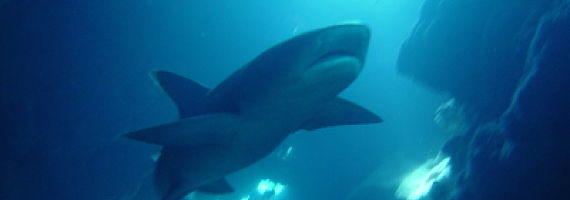
Reintegration so far has been like sitting on a surf board. I am looking down through clear blue water, not expecting any big waves, just enjoying the company. Then a shadow appears under my board and I catch myself wondering whether that black shape is PTSD hiding in reintegration below.
I've been afraid of black shapes in the water before. I spent most of my Navy Brat summers in coastal towns with beautiful beaches where summer tends to last four months longer than everywhere else. The summer between my freshman and sophomore year in high school, I was a sunburned haole girl living in Hawaii. I had a $45 hand-me-down surf board and I wasn't any good at all. But my friends all had surf boards and bubble-gum scented wax, and we all had sand rashes on our bellies and a strange skin fungus on our peeling shoulders. And we had no idea how much fun we were having.
This one day we sat in a flat glassy spot in a neat line, the waves bunching up slowly and slushing out underneath us. We gripped the pointy points of our boards and dipped the backs of them into the water, our legs dangling down and swirling us around. As we talked we squinted for a set, shifting our gaze between the horizon and our own floating shadows on the sand below. It wasn't particularly clear water, but you could see glinty mirages from time to time in the whiteness of the course coral sand.
Suddenly the boy to my left pointed a sharp finger at the water. I saw a huge dark black fish off my starboard side, its crisp edges contrasting sharply with the bright sand that seemed to glow underneath it. It jerked and he shouted "Shark!" My veins popped and adrenaline made my ears swell with sound. I didn't know what to do, but my instinct to climb inside of myself proved beneficial; we all sucked our limbs up tight and laid still, keeping every body part out of the water. Portagee Bo gingerly flipped my dangling leash up onto my legs and laid his own face down on his board sideways, looking into my eyes. It reminded me of a murder scene in a movie where the camera does a close up of a dying man just before his eyeballs turn vacant. I was peeing on my board at the time and wondering if sharks smelled pee in the water like they smelled blood.
I feel that way sometimes since my husband got home from deployment. I feel like I'm floating alone off a secret beach. No one thinks to look for me because all my friends believe that homecoming is the magic pill that cures deployment. So instead I spend time glancing at my own floating shadow, imagining that some latent PTSD is lurking below. I go back and forth between the comfort of knowing that PTSD would explain the gap between me and my husband, and the fear that PTSD is not the reason we are still disconnected.
Giving so much space to another person is the hardest thing I've ever had to do. Some days I've curled up into a tiny ball and prayed that I would not be fatally wounded by my own unwillingness to understand. I've instinctively sucked inside of myself like I once tucked my limbs onto my board and just waited for the bad feelings to go away. I have held every muscle in my body tight, afraid to look into the water to see whatever is there.
In the last few weeks I finally, finally feel like I've garnered the courage to look down into the water. There was this feeling that I just couldn't sit there on the board waiting to be eaten by a creature that may not even exist. I finally understood that I would have to be the one to make a decision to move, because nobody was coming by to rescue me. I would need to be the change that would move me away from my fears. I would have to be willing to stick my neck out and peer straight into the water.
But when I did, it was empty down there. A shiny glint reflected off the sandy floor. My own shadow hovered. But there weren't any sharks to be found. In fact, there's a very real possibility it was just a shadow the whole time and not the shark that is PTSD. I may never even know for sure. I just need to catch the next wave and paddle into shore.
Lori Volkman is a deputy prosecutor, mother of two, Navy brat, and Navy Reservist's spouse living in the Pacific Northwest who never found a challenge she couldn't sarcazz her way out of. She writes about military reintegration at www.wittylittlesecret.com.